The Ultimate Guide to Sourcing Custom Electric Trikes in 2026
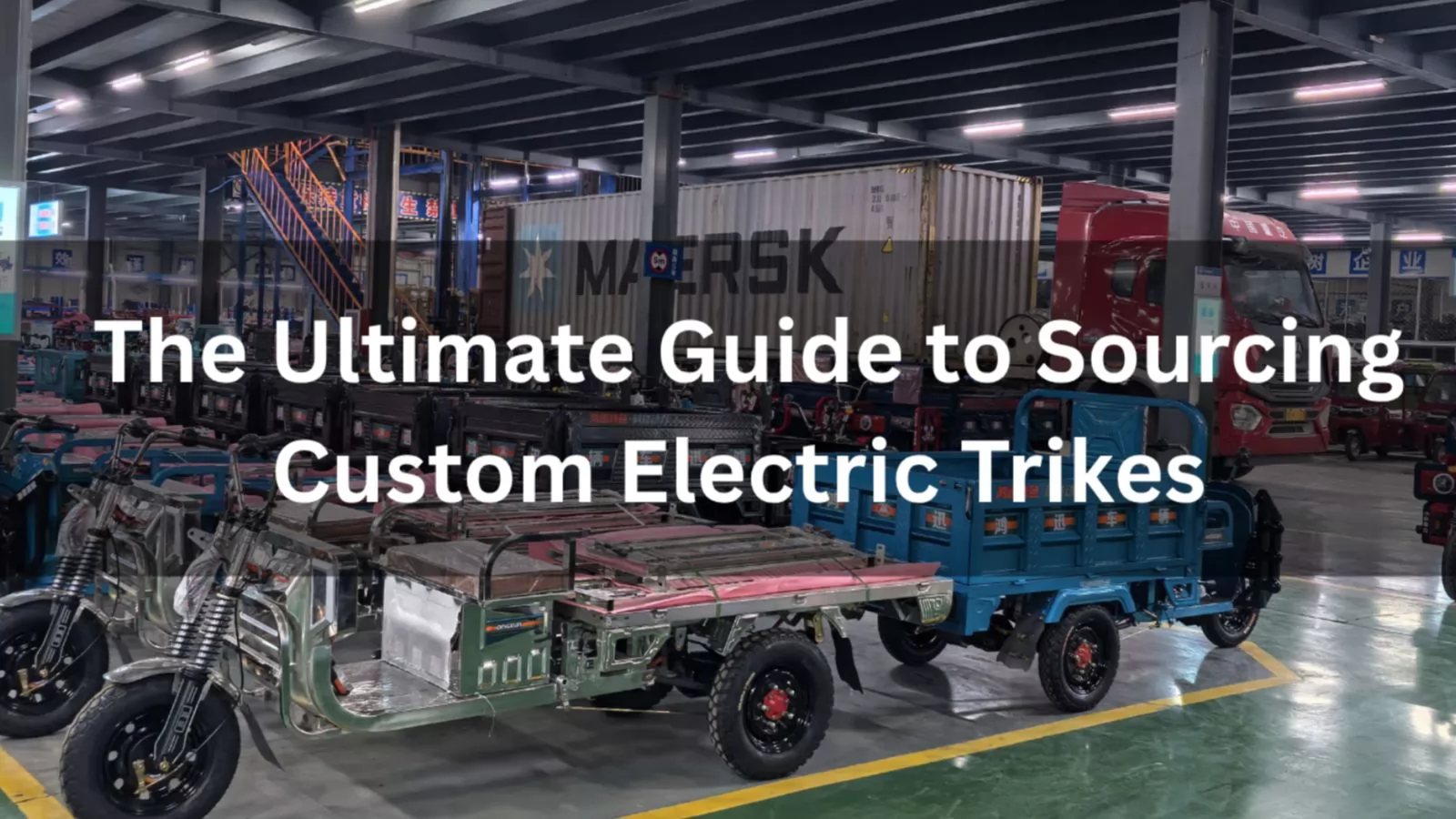
The global demand for custom electric trikes has surged by over 125%, reflecting a decisive shift away from one-size-fits-all solutions. For B2B importers, distributors, and brand owners, sourcing custom electric tricycles from China offers tremendous opportunities—but also complexity. This comprehensive guide will walk you through OEM options, CKD/SKD logistics, manufacturer evaluation criteria, and everything you need to know to build a reliable supply chain for your custom electric trike business.
Table of Contents
- 1. Understanding Customization: Beyond Logo Stickers
- 2. Navigating Import Logistics: The CKD and SKD Advantage
- 3. OEM & Private Label: Building Your Electric Trike Brand
- 4. Why Component Supply Matters in Customization
- 5. How to Evaluate a Manufacturer's Reliability
- 6. The Customization Process: A Step-by-Step Roadmap
- 7. Common Pitfalls to Avoid
- 8. Future Trends in Custom Electric Trikes
- 9. Conclusion & Next Steps
- 10. Frequently Asked Questions
1. Understanding Customization: Beyond Logo Stickers
Before diving into sourcing logistics, let's clarify what "custom electric trike" actually means in a B2B context. True customization extends far beyond slapping a logo on an existing product—it's about creating machines tailored to your specific market requirements.
Levels of Customization Available
Level 1: Private Label (Brand Application)
The most basic form of customization involves applying your brand elements—logos, color schemes, and packaging—to an existing product platform. This option suits buyers who want to build brand recognition without investing in product development. Minimum order quantities (MOQs) are typically lower, and lead times are shorter.
Level 2: Specification Modifications
This level involves adjusting technical specifications to match your market requirements. Common modifications include:
- Motor power adjustments — 500W, 800W, 1000W, or higher for different terrain and load requirements
- Battery capacity selection — 48V, 60V, 72V systems with various Ah ratings
- Frame dimensions — wheelbase, cargo box size, seating configuration
- Tire and suspension setups — for rough rural roads vs. smooth urban environments
- Controller programming — speed limits, acceleration curves, regenerative braking
Level 3: Full OEM Design
For buyers with established distribution networks and clear market insights, full OEM (Original Equipment Manufacturing) allows you to create entirely new models. This involves custom frame design, unique body styling, and purpose-built component integration. The investment is significant, but the result is a product exclusively yours—no competitor can offer the same machine.
Which Customization Level Fits Your Business?
| Business Type | Recommended Level | Reasoning |
| New distributors testing the market | Level 1 | Lower risk, faster market entry |
| Regional importers with specific demand | Level 2 | Tailored performance without R&D costs |
| Established brands seeking differentiation | Level 3 | Maximum competitive advantage, long-term ROI |
Understanding where you fit helps you communicate effectively with potential manufacturers and avoid over-committing resources before your market position is secure.
2. Navigating Import Logistics: The CKD and SKD Advantage
For most international buyers, the single largest barrier to importing electric tricycles isn't product quality—it's tariff structures and import regulations. This is where CKD (Completely Knocked Down) and SKD (Semi-Knocked Down) shipping modes become game-changers.
What Are CKD and SKD?
CKD (Completely Knocked Down): The vehicle is shipped as a complete kit of parts—frame components, motor, battery, wheels, body panels—all packaged separately. The vehicle is assembled at the destination country. Importers benefit from significantly lower tariff rates because many countries tax "unassembled vehicle parts" at lower rates than "complete vehicles."
SKD (Semi-Knocked Down): Major sub-assemblies (such as the frame with motor mounted, or the body shell) are shipped intact, while other components are packed separately. This reduces assembly complexity at the destination while still offering tariff advantages.
Tariff Optimization: A Practical Example
Consider an importer in East Africa facing a 25% import duty on complete electric vehicles, but only 10% on vehicle components. For a container of 20 units valued at $40,000:
| Shipping Mode | Duty Rate | Duty Paid | Savings |
| Complete Unit (CBU) | 25% | $10,000 | — |
| CKD Kit | 10% | $4,000 | $6,000 per container |
Over a year of monthly shipments, CKD shipping saves $72,000—capital that can be reinvested in marketing, inventory, or local assembly infrastructure.
Beyond Tariffs: Other CKD/SKD Benefits
Local Assembly Creates Value: CKD shipments enable you to establish local assembly operations, which can qualify for local manufacturing incentives, create employment, and allow final quality inspection before delivery to customers.
Freight Efficiency: CKD packaging is denser than fully-assembled vehicles. A 40-foot container might hold 8-10 assembled trikes, but 20-25 CKD kits—dramatically reducing per-unit shipping costs.
Inventory Flexibility: With CKD inventory, you can adapt to market demand shifts. Need more cargo models? Assemble cargo configurations. Passenger trikes trending? Shift your assembly mix without waiting for new shipments.
Pro Tip: Not every manufacturer can support CKD exports effectively. When evaluating suppliers, ask specifically about their CKD packaging capabilities, assembly documentation, and technical support for your local assembly team.
3. OEM & Private Label: Building Your Electric Trike Brand
Many importers start by buying standard models and quickly realize the problem: everyone else has access to the same products. Building a defensible market position requires owning your product identity through OEM and private label strategies.
The Private Label Advantage
- Build brand equity — Every trike on the road becomes a moving advertisement for your company
- Control pricing — Without direct price comparisons to competitors, you maintain margin flexibility
- Create customer loyalty — Parts, service, and accessories all flow through your distribution network
- Negotiate from strength — As your branded units multiply, your relationship with the manufacturer shifts from "customer" to "partner"
Certification Alignment: A Critical OEM Consideration
Different markets demand different certifications. A manufacturer who understands this landscape can save you months of regulatory headaches.
| Target Market | Key Certifications | Typical Requirements |
| European Union | EEC, CE | Homologation for road-legal vehicles |
| United States | DOT, EPA | Safety standards, emissions testing |
| Southeast Asia | Varies by country | Often local type approval required |
| Middle East | GCC Standard | Gulf Cooperation Council conformity |
| Africa | Varies widely | Some countries accept EEC certification |
To learn more about our specific OEM capabilities and past projects, visit our OEM Electric Tricycle Manufacturer page for detailed information.
The OEM Process: From Concept to Container
A professional OEM engagement follows a structured workflow:
- Phase 1: Requirements Gathering (2-4 weeks) — Define target market, use case, price positioning, technical requirements, certification requirements, and branding guidelines
- Phase 2: Design & Engineering (4-8 weeks) — Manufacturer proposes base platform or custom design, 3D renderings, component selection, and costing
- Phase 3: Prototyping (4-6 weeks) — First prototype production, performance testing, customer feedback integration, final specification lock
- Phase 4: Production & Quality Control (4-8 weeks) — Mass production setup, in-line quality inspections, pre-shipment inspection, packaging
- Phase 5: Shipment & Support — CKD or CBU shipment coordination, customs documentation, post-sale technical support
4. Why Component Supply Matters in Customization
An electric tricycle is only as reliable as its weakest component. This sounds obvious, yet many importers focus exclusively on the finished product without considering the component ecosystem behind it.
Critical Components That Define Quality
Battery System: The battery typically represents 30-40% of a trike's total cost. Quality variations are enormous—from Grade A cells from Tier 1 manufacturers (CATL, BYD, LG) to recycled or off-spec cells. A supplier who manufactures their own batteries or has deep partnerships with battery producers can guarantee quality and pricing stability.
Motor and Controller: Motor power ratings are often misleading. A "1000W motor" from one factory may deliver sustained 1000W output, while another's may barely sustain 600W before overheating. Key differentiators include motor type, thermal management, and controller quality.
Charger: Often overlooked, the charger significantly impacts battery lifespan and user safety. Quality chargers include proper current limiting, temperature monitoring, and automatic shutoff.
The Spare Parts Reality
Electric tricycles have many wear components: tires, brake pads, bearings, lights, switches, cables, and more. A reliable manufacturer should be able to supply these parts consistently over the vehicle's lifetime.
Questions to ask potential suppliers:
- What is your policy for spare parts availability after model discontinuation?
- Can you provide exploded parts diagrams for each model?
- Do you maintain inventory of fast-moving spares?
- What is the typical lead time for spare parts orders?
5. How to Evaluate a Manufacturer's Reliability
With hundreds of factories claiming to produce electric tricycles, separating capable partners from risky vendors requires systematic evaluation.
Standard 1: In-House Core Capabilities vs. Assembly-Only Operations
Many "manufacturers" are actually assembly workshops that purchase all components from external suppliers. While this model can produce acceptable products, it introduces supply chain vulnerabilities. In contrast, manufacturers with in-house production of core components—particularly batteries, chargers, and frame fabrication—offer significant advantages: direct quality control, cost advantages from vertical integration, faster customization response times, and greater supply stability.
Standard 2: Supply Chain Ecosystem Strength
Even the most vertically integrated factory cannot produce everything internally. The strength of a manufacturer's supplier network determines their ability to secure components during shortages, offer multiple quality/price options, access new technologies, and maintain competitive pricing.
Standard 3: Industry Credibility and Customer Portfolio
Who a manufacturer works with reveals their capability level. Look for partnerships with major domestic brands, consistent export relationships to regulated markets (EU, North America), customer testimonials with specific performance data, and willingness to provide reference contacts.
Standard 4: Technical Support and Communication
Evaluate communication quality from the first interaction. Do inquiries receive substantive responses within 24-48 hours? Can they explain engineering tradeoffs clearly? When you raise concerns, do they propose solutions or make excuses? Poor communication during the sales process rarely improves after you place an order.
Standard 5: Quality Management Systems
| Quality Check Stage | What to Verify |
| Incoming inspection | How are supplier components tested before production? |
| In-process QC | What checks occur during assembly? |
| Final testing | What percentage of units undergo full testing? |
| Traceability | Can defects be traced to specific components and batches? |
6. The Customization Process: A Step-by-Step Roadmap
Step 1: Market and Requirements Definition
Before approaching manufacturers, crystallize your requirements: target customers, primary use cases, viable price points, technical requirements (range, speed, load capacity, terrain), regulatory requirements, initial order volume, and budget constraints.
Step 2: Manufacturer Identification and Qualification
Identify potential manufacturing partners through industry trade shows, online B2B platforms, industry associations, and competitive product tear-downs. Create a shortlist of 3-5 candidates and conduct preliminary qualification.
Step 3: RFQ and Proposal Evaluation
Issue a formal Request for Quotation (RFQ) to your shortlist. Evaluate proposals on technical compliance (30%), pricing and terms (25%), capability evidence (20%), communication quality (15%), and flexibility (10%).
Important: Avoid selecting solely on lowest price—a low price that comes with poor quality or unreliable supply is expensive in the long run.
Step 4: Sample Development and Validation
Before committing to volume production, invest in sample development. Order 1-3 prototype units to specification, conduct rigorous testing, identify issues and request modifications, and iterate until the sample meets requirements.
Step 5: Contract Negotiation and Production Planning
With approved samples, finalize the commercial relationship including detailed product specifications, quality standards and acceptance criteria, pricing and payment terms, delivery schedule, warranty provisions, and intellectual property protection.
Step 6: Ongoing Relationship Management
Successful customization is not a one-time transaction but an ongoing partnership. Establish regular communication, share market feedback to drive continuous improvement, provide demand forecasts, and visit the factory periodically to strengthen the relationship.
7. Common Pitfalls to Avoid
Even experienced importers make mistakes in custom EV sourcing. Learn from these common errors:
Pitfall 1: Prioritizing Price Over Capability
The temptation to squeeze every dollar from purchase price is understandable, but lowest-price suppliers often lack the capability to support customization effectively. You may save 5% on unit cost but lose far more in quality failures, production delays, and supply disruptions.
Pitfall 2: Insufficient Specification Detail
Vague specifications invite misinterpretation. "Good quality battery" means nothing without specifics on cell grade, capacity, cycle life expectation, and warranty terms. Invest time in detailed specifications upfront.
Pitfall 3: Skipping Pre-Shipment Inspection
Trust is important, but verification is essential. Pre-shipment inspection by a third party or your own representative catches issues before they become your inventory problem. The cost of inspection is trivial compared to receiving a container of defective units.
Pitfall 4: Neglecting Spare Parts Planning
Many importers focus exclusively on the initial unit purchase and forget about the aftermarket. Plan spare parts inventory from the first order, not after customers start calling.
Pitfall 5: Single-Source Dependency
Relying entirely on one manufacturer is convenient—until it isn't. Factory fires, ownership changes, capacity constraints, and quality issues can disrupt your supply overnight. Where feasible, develop relationships with multiple qualified suppliers for critical models.
8. Future Trends in Custom Electric Trikes
The electric tricycle market continues to evolve. Forward-thinking importers anticipate trends rather than reacting to them.
Trend 1: Smart Features Integration
Basic electric trikes are giving way to connected vehicles with GPS tracking and fleet management integration, smartphone apps for diagnostics, anti-theft systems with remote disable, and over-the-air firmware updates.
Trend 2: Battery Technology Advances
Lithium iron phosphate (LiFePO4) batteries are becoming standard due to safety and longevity advantages. Emerging technologies include solid-state batteries, swappable battery systems for commercial fleets, and second-life battery applications.
Trend 3: Market Segmentation Deepening
The era of generic electric trikes is ending. Successful products increasingly target specific niches: last-mile delivery trikes, mobility trikes for elderly users, recreational trikes for tourism, heavy-duty industrial trikes, and agricultural trikes for smallholder farming.
9. Conclusion & Next Steps
Ready to Start Your Custom Electric Trike Project?
This guide has covered the landscape of custom electric tricycle sourcing—from understanding customization levels and CKD logistics to evaluating manufacturers and navigating the OEM process. The principles are straightforward, but execution requires a partner who combines manufacturing capability with supply chain expertise and a genuine commitment to your success.
At Uzen, we have built our business around these principles. With proprietary manufacturing facilities for lithium batteries and chargers, strategic partnerships with leading frame and motor suppliers, and experience serving customers across Southeast Asia, Africa, the Middle East, and beyond, we understand what international B2B buyers need.
We don't just manufacture electric tricycles—we serve as your supply chain partner, helping you navigate the complexities of customization, certification, and logistics so you can focus on building your market.
For detailed information about our manufacturing capabilities and past OEM projects, visit our OEM Electric Tricycle Manufacturer page.
10. Frequently Asked Questions
What is the minimum order quantity for custom electric trikes?
MOQs vary by customization level. Private label applications may start at 10-20 units, while full OEM designs typically require 50-100 units or more. We work with buyers to structure initial orders that manage risk while achieving manufacturing efficiency.
How long does a typical custom order take from specification to delivery?
Timeline depends on customization complexity. For specification modifications of existing models, 8-12 weeks is typical. Full OEM projects require 16-24 weeks including prototyping and testing.
Can you provide CKD kits for local assembly?
Yes. We have extensive experience with CKD and SKD shipments, including packaging optimization, assembly documentation, and technical training support for your local assembly team.
What certifications can you support?
We have produced vehicles certified for EEC (European), DOT (US), and various regional standards. We recommend discussing specific certification requirements early in the project to ensure smooth approval.
Do you supply spare parts for your electric trikes?
Absolutely. We maintain spare parts inventory and can ship replacement components within 2-4 weeks. For high-volume customers, we can establish dedicated spare parts buffer stock to ensure immediate availability.
This guide was prepared by the Uzen team to support B2B buyers navigating the custom electric tricycle sourcing process. For more information about our manufacturing and supply chain services, contact us today.
0
Comments
Leave a Comment
Your email address will not be published. Required fields are marked *
Name can't be empty
Email error!
Message can't be empty
😍
😜
😳
😌
😄
😘
😝
😒
😃
😚
😚
😛
😟
😧
😀
😉
😓
😱
😤
😣
😂
😥
😩
😠
😢
😭
😰
😨
😡
😆
😪
😅
😐
😇
😋
😴
👿
😕
😏
😷
😵
😟
😮
😯
😑
👧
👴
😧
😬
😾
👶
👱
👵
👸
🙀
👺
👦
👩
👨
😽
😿
🙈
💩
💥
💤
😼
😹
🙉
🔥
✨
💦
👎
✌
👆
👈
💪
💹
👍
👊
💴
💶
💷
💸
👉
💵
🙏
🌎
🏧
👏
💳
👇
💑
🙆
🙅
💁
👫
👭
🙎
🙇
👑
👔
Submit Comment
Most Popular
-
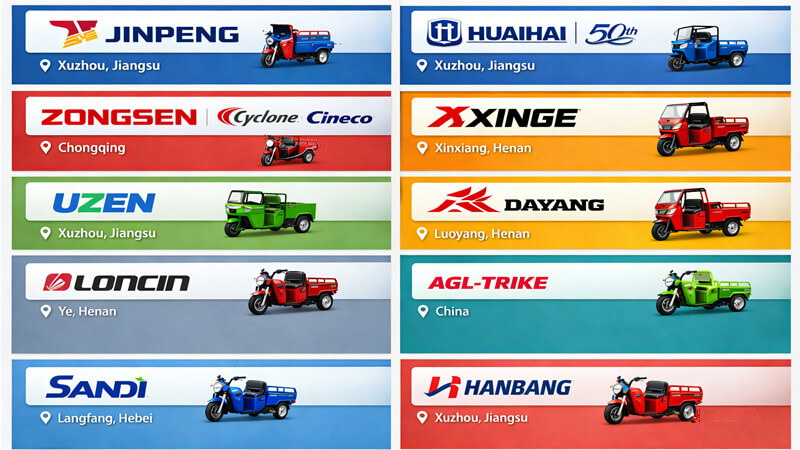 Jul 24, 2026Top 10 Electric Tricycle Manufacturers in China 2026
 -
 May 22, 2026Top 10 China Floor Scrubber Manufacturers in 2026
 -
 Jul 10, 2026Top 10 Three Wheel Electric Tricycle Manufacturers (2026 Sourcing Guide)
 -
 May 25, 2026Top 10 Electric Street Sweepers in China (2026 Guide)


Laster Blogs


Set A Consultation Today
Name can't be empty
Email error!
Send Your Message
*We respect your confidentiality and all
information are protected.